


raygeo.ops.cut.crescent
Functions
cut_area()
cut_area(
    c1: tuple[float, float],
    c2: tuple[float, float],
    radius: float,
    fragments: Sequence[Sequence[tuple[float, float]]],
    valid_area: Sequence[Sequence[tuple[float, float]]],
) -> tuple[float, float]
Area of disk(c2) − disk(c1) − fragments, intersected with valid_area.
Returns (total, left) where left is the portion on the left side of the step vector c1 → c2.
| Parameter | Type | Description |
|---|---|---|
c1 | tuple[float, float] | Previous centre (x, y). |
c2 | tuple[float, float] | Next centre (x, y). |
radius | float | Disk radius (mm). |
fragments | Sequence[Sequence[tuple[float, float]]] | List of polygons (cleared fragments). |
valid_area | Sequence[Sequence[tuple[float, float]]] | Valid region polygons (intersection). |
| Returns | tuple[float, float] | (total_area, left_area) (mm²). |
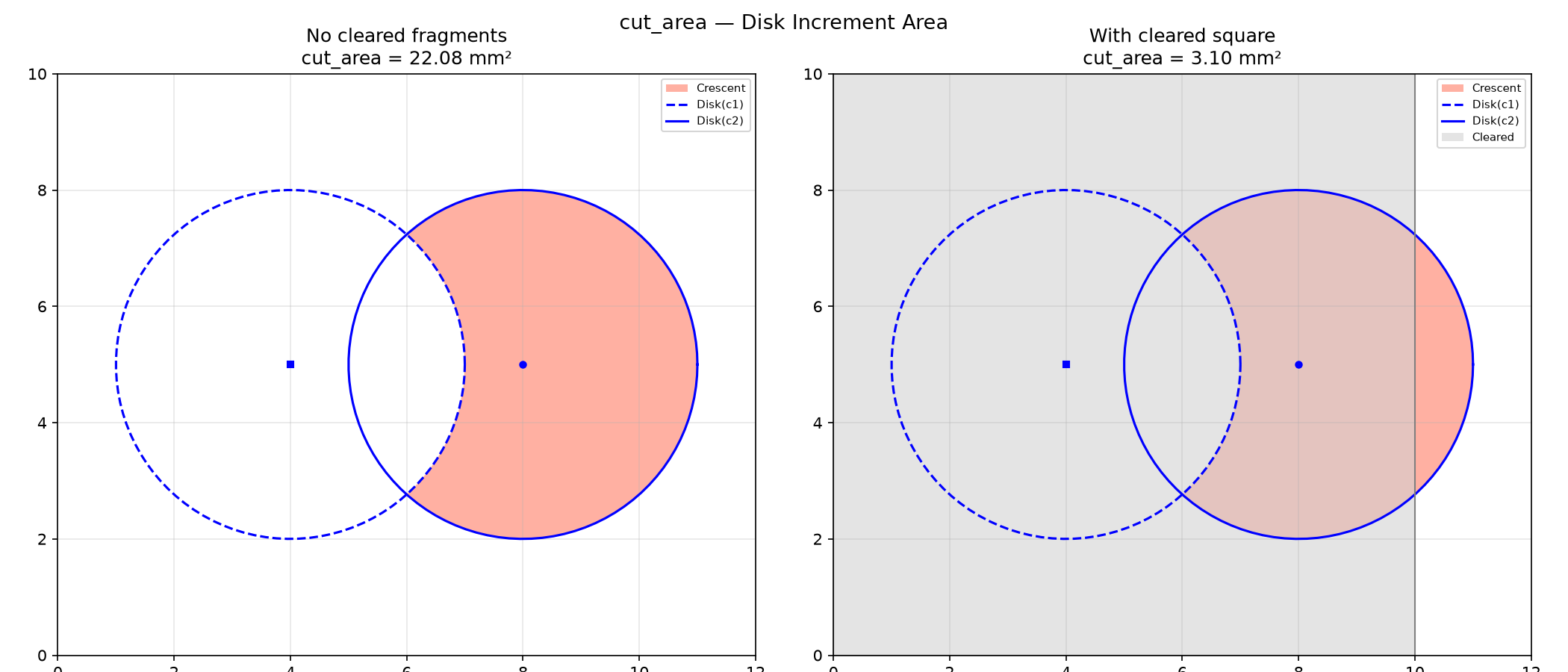
Disk increment (in red) produced by stepping a disk from C1 to C2. Left panel shows the full increment; right panel shows the reduction when a cleared fragment (gray) occupies part of the increment.
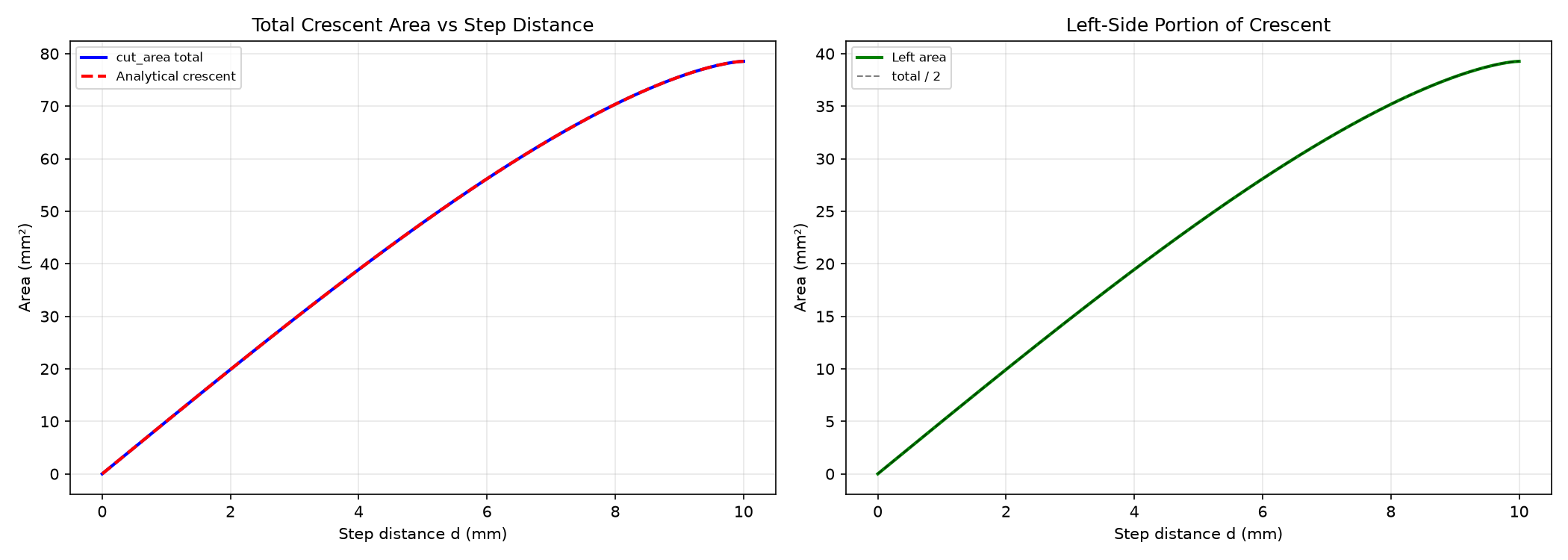
Crescent area as a function of step distance d compared with the analytical crescent formula.
Right panel shows the left-side portion (half of total for the symmetric case).
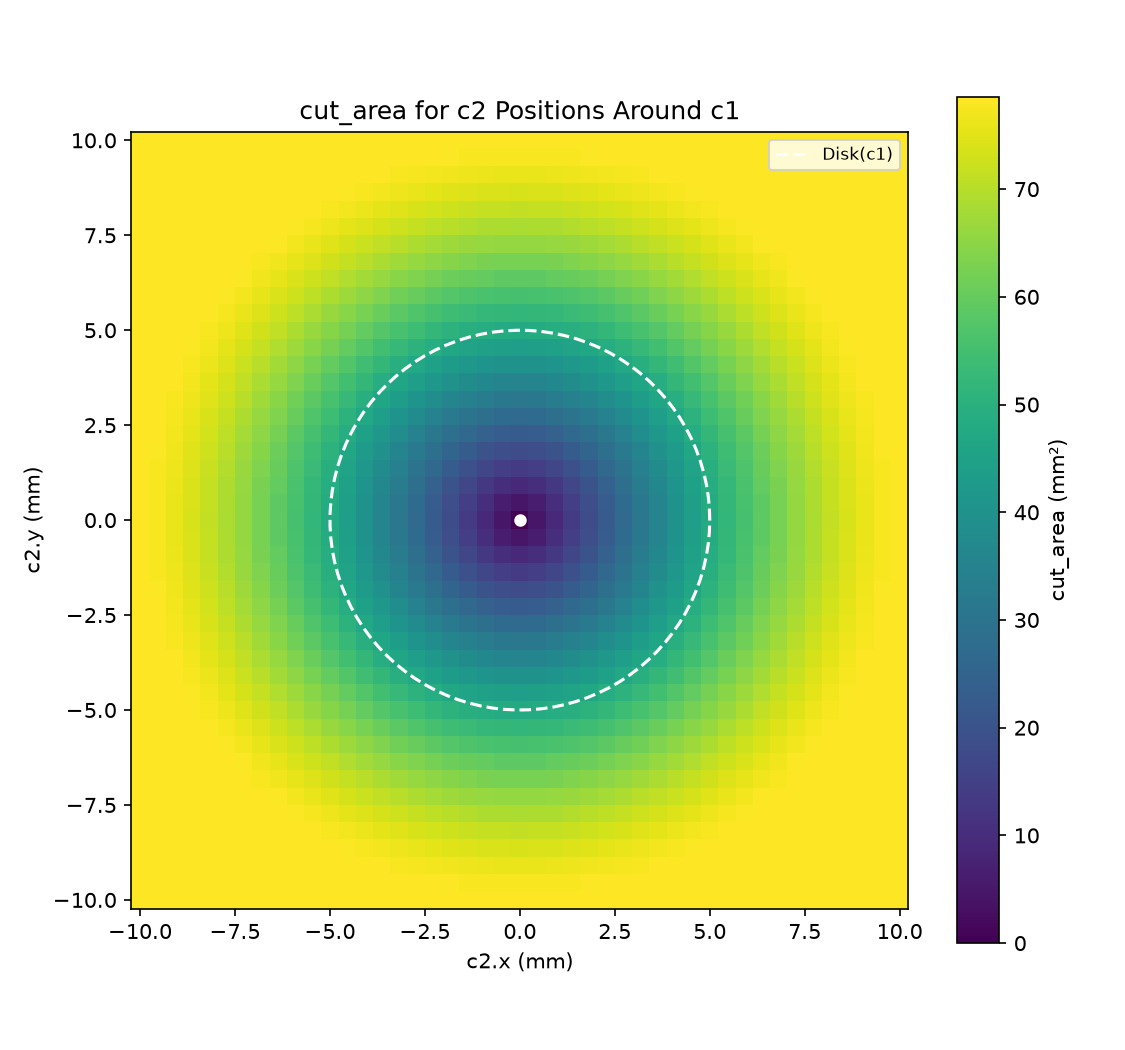
2D heatmap of cut_area as the c2 centre is moved across a grid around c1. The dashed circle
shows Disk(c1); the area is zero when c2 coincides with c1 and maximal at intermediate
distances.
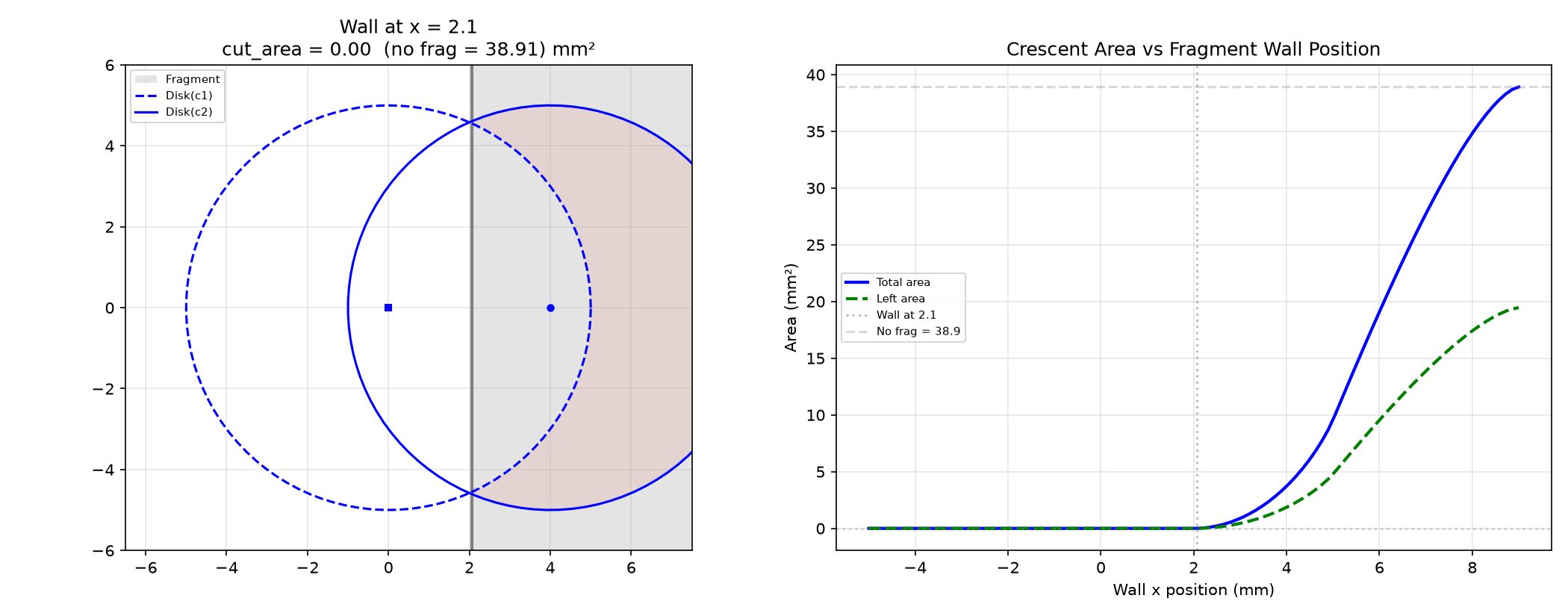
Effect of a vertical-wall fragment sweeping across the crescent. Left panel shows the geometry at
one wall position; the right panel plots total and left area vs wall x, demonstrating smooth
continuity.
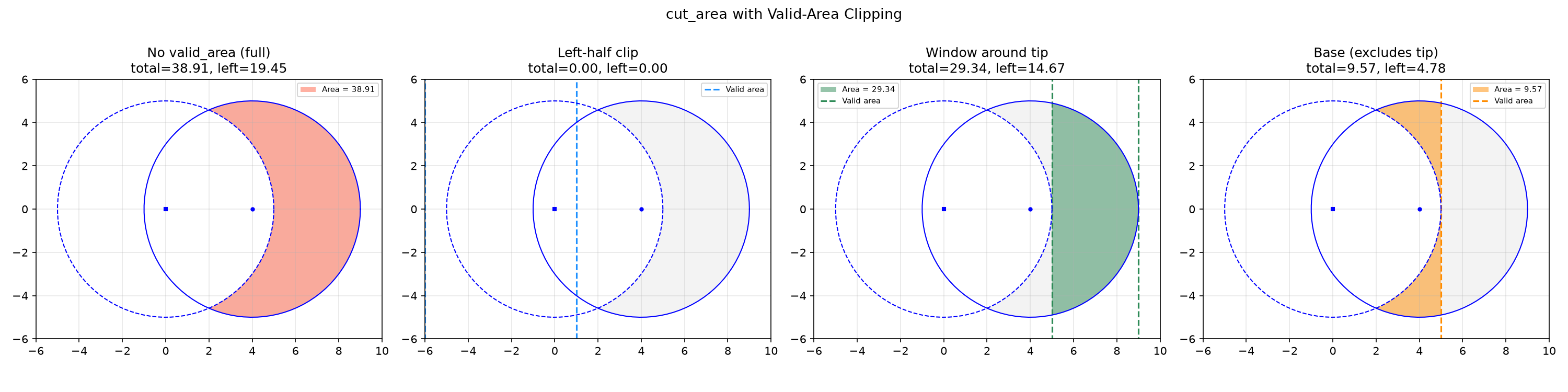
Crescent clipped to different valid_area polygons: no clip (full), a left-half window, and a
window around the crescent tip. The faint gray shape is the unclipped crescent reference.